Look at the Bars, Not the Total: What a Flat Line Actually Means
Two screenshots. The first is a day of estimated ad revenue: $138.72, an ordinary Wednesday. The second is the realtime card – sixty bars, one per minute, almost every one sitting between 120 and 180 views.
The interesting thing about both is how boring they look. No spike, no lucky video carrying an hour, no launch. Just the same shape, minute after minute, day after day.
That shape is the whole subject. A viral video pays you once. A steady channel pays you every day – and the two produce completely different charts, different workloads and different decisions.
What we are not saying
Before anything else, the limits on those numbers, because this is a subject where scepticism is the correct starting position.
“Estimated” means estimated. Google can adjust the figure before the month closes. It is one day from one operation, and we are not multiplying it into a monthly or annual claim. We are not saying anyone who copies a process gets this, or gets it in any particular timeframe. We are not naming the channel or the subject, and nothing here is a promise about views, income or how long anything takes.
What the two screenshots are good for is narrow and real: they show what steady looks like on a chart, and steady is something you can aim at deliberately.
How to read the two charts
Most people open YouTube Studio and read it wrong – usually by looking at totals, which move for reasons that have nothing to do with anything you did today.
| “Estimated” | Ads + Premium | A flat line | One bar = one minute | The short bars |
|---|---|---|---|---|
| Not final
Google can adjust it before the month closes. Treat any single day as provisional. |
Two sources
The figure counts advertising and YouTube Premium watch time, not ads alone. |
Good news here
It means income does not depend on one video. Flat at a working level is the goal. |
Height is traffic
Bars at the same height mean steady arrival, not a spike you got lucky with. |
On the far right
Those minutes are still being counted. It is not a collapse. Do not panic at it. |
The third column needs a distinction, because “flat” gets used for two opposite things. A flat line near zero is the silent phase almost every channel goes through, and we wrote about surviving it in why your YouTube views are flat. A flat line at a working level is the opposite – it is what a catalogue looks like when it is carrying the month rather than one upload.
Viral pays once. Steady pays every day.
The difference is not only in the money. It is in what each one does to the rest of your week.
| A viral video | A steady catalogue | |
|---|---|---|
| Revenue shape | A spike, then a decline you cannot stop | A line that barely moves day to day |
| What it depends on | One upload continuing to be recommended | Many uploads each doing a small amount |
| When something breaks | The whole month breaks with it | One video dips and the line barely notices |
| What you can plan | Almost nothing. You cannot schedule luck | Next month, roughly, from this month |
| The emotional cost | Every upload is a referendum | A quiet week is a row in a table |
| How you get there | Unrepeatable by definition | Volume of ordinary videos that keep working |
The last row is the one that matters and the one nobody enjoys hearing. Steady is not a strategy you switch to. It is what a back catalogue does once enough ordinary videos are each pulling a small, continuous amount of traffic – which takes time and a lot of unremarkable uploads before the chart looks like anything.
And the fifth row is worth more than it sounds. When the month is carried by fifty videos rather than one, a bad week stops feeling like a verdict on whether you should be doing this. That is exactly the shift we described in a bad month is data, not a verdict – same operation, a month that came in low, and no panic, because the shape was known.
Watch the reel
The realtime card and the revenue line, side by side. Posted on the BANI Academy page.
When one steady channel becomes three
Here is the part that surprises people who get the first channel working. The bottleneck stops being content almost immediately. It becomes administration.
Three channels means three sets of credentials, three calendars, three sets of numbers and three places for something to go wrong – and the first failure mode is mundane: signing into the wrong one, or doing everything from a single browser session where the channels are not really separate at all.
That is the problem our team built BNC for, and we should be transparent that it is our own product. What it does is narrow: one channel is one separate profile with its own proxy, you can open them side by side on the same computer, and deleting a profile removes that one cleanly while the rest stay untouched. It runs on Windows and macOS, and the licence is per machine rather than per channel.
What it is not
Being equally clear about the other side, because this category of software attracts claims that are not true and not safe to rely on.
| What it does | What it does not do |
|---|---|
| Keeps each channel in its own profile so sessions do not mix | Increase views, subscribers or revenue. It is a management tool, not a growth tool. |
| Lets you work on several channels side by side without signing in and out | Make anything you do compliant. The platform’s rules apply exactly as before. |
| Removes one profile cleanly without disturbing the others | Guarantee that a channel is safe, or that an issue on one cannot affect you elsewhere. |
| Runs on Windows and macOS, licensed per machine | Have anything to do with the numbers at the top of this article. Those screenshots are not evidence for a tool. |
Worth stating plainly: running several channels is only worth doing when the first one already works and the process is written down. Otherwise you are not scaling a system, you are opening a second hobby with better software – the argument we made in full in one channel is a hobby, five is a system.
What actually produces a flat line
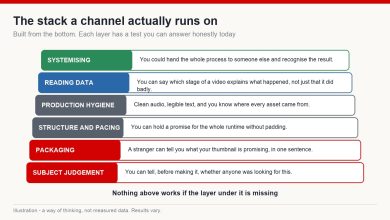
Nothing on this page is the cause of those bars. The cause is boring and slow: enough ordinary videos, published consistently, on subjects people keep searching for, each contributing a small amount of traffic every day for a long time afterwards.
That is why “publish consistently” survives every change in advice – not because consistency is magic, but because a catalogue is the only thing that produces a line instead of a spike. The habits that build one are set out in the ten habits a channel is actually built on.
And once the line exists, the job changes from chasing to measuring. Which is the point of keeping your own monthly record rather than refreshing a dashboard.
Frequently asked questions
Is $138.72 a day typical?
It is one estimated day on one channel, and we are not presenting it as typical for anyone. Treat it as an illustration of a shape, not a benchmark.
Why does the realtime chart dip at the right-hand edge?
Because those minutes are still being counted. It is the most misread part of the card and it causes a lot of unnecessary alarm.
Does a flat revenue line mean the channel has stopped growing?
Not on its own. Flat over days is stability; whether it is growing is a question for the monthly numbers, not the daily ones.
Should I be chasing a viral video?
You cannot schedule one. Aim for the catalogue and accept a spike gratefully if it arrives.
Check the shape before the number
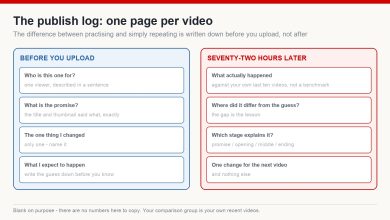
Open your own realtime card and look at the bars rather than the total. Then open the revenue chart and look at whether it is a line or a hill. Those two shapes tell you more about the state of your channel than any single figure does.
Write down what you see, monthly, next to what you published. Six months of that is the difference between running a channel and guessing at one.
Learning a lot does not make anyone good. Doing a lot does.
If you want the structure that makes that stick, that is what our free challenge is built for: no barrier to entry, a genuine commitment to action, and a refundable commitment fee you get back when you finish. You are not paying for the knowledge. You are betting on yourself finishing, and we hold the stake.
Want to go further? Comment STEADY on the original reel and we will explain what keeps traffic this even, or BNC if you want to know how the multi-channel setup works.
For more on building channels for English-speaking audiences, that is what we work on at mmoyoutube.com.